
If your check engine light just turned on and a scan tool spit back the P0020 code, you're dealing with a camshaft timing problem on the passenger side of the engine (Bank 2). It's not the scariest code out there, but it's also not one you want to ignore — left alone, it can chip away at fuel economy, throttle response, and eventually your engine's timing components.
Here's the plain-English version of what's going on, what usually causes it, and how to get it sorted without throwing parts at the problem.
What Does P0020 Actually Mean?
Your engine computer controls when the intake or exhaust camshaft opens and closes valves relative to the crankshaft — that's variable valve timing, and it's how modern engines balance power, fuel economy, and emissions on the fly. To do that, it relies on a camshaft position actuator, essentially a solenoid that adjusts oil flow (or, on some engines, an electric motor) to physically shift cam timing.
P0020 specifically means the computer sent a command to Camshaft Actuator A on Bank 2, and the electrical circuit came back open or the voltage wasn't where it should be. In other words, the ECM isn't hearing back from that actuator the way it expects to.
Quick refresher since this trips people up: "Bank 2" is whichever side of a V6 or V8 engine does not contain cylinder #1. On most Ford, GM, and Chrysler engines, that's the passenger side; check your specific engine layout since it varies.
Symptoms You'll Notice
- Check engine light on, with P0020 (and sometimes a companion code like P0022 or P0016) stored
- Rough, uneven idle — engine may hunt between 600 and 900 rpm
- Hesitation or a flat spot when you first hit the gas
- Weak low-end power, especially noticeable under 30 mph
- In some cases, the engine drops into limp mode and won't rev past a set RPM to protect itself
The reason you feel all of this is simple: without a reliable signal from that actuator, the computer can't trust the cam timing on that bank, so it falls back to a conservative, generic timing map. That's a safety net, not a solution — performance and smoothness both take a hit until the underlying issue is fixed.
What Causes P0020
A worn or failed actuator. This is the most common culprit. The actuator itself can seize from sludge buildup (a good argument for staying on top of oil changes), wear out internally, or short out electrically. If it physically can't move, the ECM sees the same thing as an open circuit.
Wiring and connector problems. The actuator communicates through a dedicated harness carrying a reference voltage and ground. Corrosion at the connector, a chafed wire rubbing against a bracket, or a cracked splice can all interrupt that signal — sometimes intermittently, which makes diagnosis more annoying.
A struggling engine computer. Less common, but real: if the ECM's internal driver circuit for that actuator fails, it can register as an open circuit even though the actuator and wiring are fine. Heat cycling and moisture intrusion over years of service are usually behind this one.
Software mismatch. If the vehicle has had a prior repair, a retrofit, or an ECM swap where the calibration doesn't line up with the actuator that's actually installed, the computer can misread normal voltage behavior as a fault.
Diagnosing It the Right Way
Don't skip straight to replacing parts — a $400 actuator swap won't help if the real problem is a $15 connector. Here's the order that actually saves money:
- Pull the full code list, not just P0020. Related codes (P0011–P0022 range) point you toward whether this is isolated or part of a broader VVT system issue.
- Check the actuator connector first. Corrosion and loose pins cause a surprising number of these codes. Clean it, reseat it, clear the code, and see if it comes back before you touch anything else.
- Test continuity on the actuator's wiring with a multimeter — you're looking for near-zero resistance on power and ground. Anything showing an open circuit points straight at the harness.
- Check reference voltage with the engine running. Most systems supply around 5V to the actuator. If you're seeing well under 4.5V, or the reading is jumping around, that's either a failing actuator or a marginal connection.
- Run an actuator command test through a capable scan tool. It'll trigger the actuator directly — listen for it to engage, or watch cam timing shift with a timing light. No response, no movement, no doubt: the actuator's bad.
- If everything electrical checks out, look at the software. A calibration update or reflash can resolve a false P0020 when the hardware's healthy.
What It Costs to Fix
| Repair | Typical Cost |
|---|---|
| Actuator replacement | $300–$500 part + $150–$250 labor |
| Wiring/connector repair | $100–$200 total |
| ECM/PCM replacement + programming | $600–$900 module + $200–$300 programming |
The wiring fix is obviously the cheapest outcome, and it's genuinely common enough that it's worth ruling out first. The ECM route is the one people dread, mostly because dealer programming and lead times make it feel like a bigger job than it needs to be.
Which Vehicles See This Most
P0020 isn't picky, but a few engine families show up more than others in shop logs: GM's 3.6L V6 (Equinox, Traverse, Acadia, CTS), Nissan's VQ-series V6, Chrysler's 3.6L Pentastar, and Hyundai/Kia's Theta II engines. If you're driving one of these and the cam actuator has never been touched, it's often just wear catching up with mileage rather than a fluke.
When You Need a Replacement Control Module
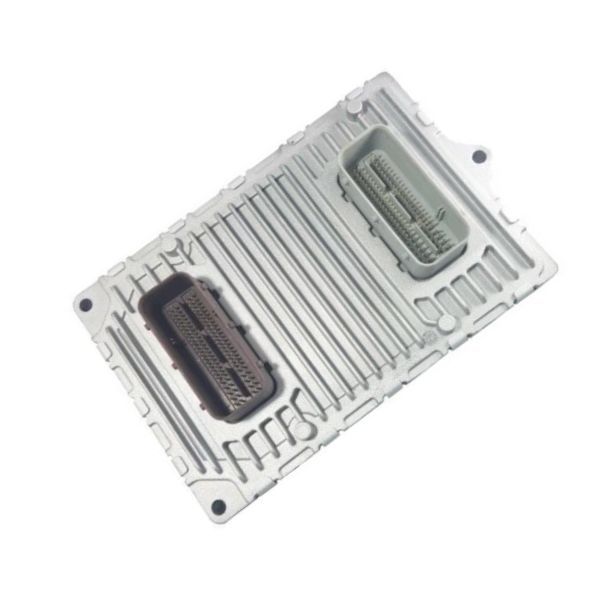
If diagnosis points to the ECM itself rather than the actuator or wiring, you've got a decision to make: dealer replacement, a used module off a salvage vehicle (risky — no warranty, no guarantee it's not already failing), or a professionally remanufactured unit that's already matched and programmed to your VIN.
That last option is what we do at Auto Computer Performance — remanufactured ECMs, PCMs, and ECUs that arrive ready to install, VIN-programmed, and covered by a warranty, so you're not stuck making a dealer appointment just to get your car talking to its own computer again. If you've confirmed the ECM is the issue, it's worth checking whether your exact year, make, and model is in stock before you commit to a dealer-only fix.
Keeping It From Coming Back
- Stick to your manufacturer's oil change interval, and use the spec'd viscosity — thick, dirty oil is one of the leading causes of actuator sludging.
- Inspect connectors near the actuator periodically if you're in a salt-heavy or humid climate; corrosion loves those environments.
- After any timing chain or timing-related work, run a scan to confirm actuator signals are back in spec before calling the job done.
- Don't ignore an intermittent version of this code. "It went away on its own" usually means it's coming back at a worse time.
Quick FAQ
Can I drive with a P0020 code? Short trips, yes — but don't put it off. Running on a fallback timing map for weeks or months puts extra wear on the timing chain and can eventually affect other cylinders.
Will clearing the code fix it? No. Clearing it just resets the light. If the underlying actuator, wiring, or ECM issue is still there, the code returns — usually within a few drive cycles.
Is this the same as a P0016 or P0022? Related, not identical. P0016 is a crank/cam correlation issue, and P0022 is the "retarded" timing version of this same actuator circuit. They often show up together because they're all measuring the same timing system from different angles.
Bottom line: P0020 is the ECM telling you it lost communication with a specific actuator, not a guess about what's broken. Work through the wiring and actuator first — that's where most of these get resolved — and only look at the control module itself once everything else checks out clean.
P0020 Code: Frequently Asked Questions
Is the P0020 code serious?
P0020 is a moderate-priority fault. The engine usually still runs, but you may notice a rough idle, reduced power, poor fuel economy or a hard start. Left unfixed, incorrect cam timing can lead to further engine wear, so it should be diagnosed soon.
Can I drive with a P0020 code?
Most vehicles can be driven short distances with P0020, but it is best to have it diagnosed quickly. If the engine stalls, hesitates badly or will not start, avoid driving until the fault is repaired.
What usually causes P0020?
The most common causes are low or dirty engine oil, a faulty bank 2 intake camshaft actuator (oil control) solenoid, damaged wiring or connectors in the actuator circuit, and timing chain problems. A faulty engine computer (PCM/ECM) is a less common cause.
What is the difference between P0010 and P0020?
Both codes point to an intake camshaft position actuator circuit fault. P0010 refers to bank 1, while P0020 refers to bank 2, the side of the engine that does not contain cylinder number 1.
Can a bad PCM cause P0020?
Yes, although it is rare. If the oil, solenoid and wiring all test good and the code returns, the PCM driver circuit may be at fault. Auto Computer Performance offers tested replacement PCMs programmed to your VIN. Call (954) 773-4235 for help.
P0020 Code Quick Facts
- Definition: "A" camshaft position actuator circuit / open – Bank 2.
- System: variable valve timing (VVT) on the Bank 2 cylinder head.
- Common causes: faulty VVT solenoid, wiring or connector damage, low or dirty engine oil, worn timing components, or a failed engine computer driver circuit.
- Can I drive? Usually for short distances, but have it diagnosed soon to avoid engine damage.
When the P0020 Code Points to the Engine Computer
In most cases the P0020 code is caused by the solenoid, wiring or oil condition. However, the engine computer controls the VVT solenoid through an internal driver circuit, and that circuit can fail. Suspect the module if:
- The solenoid resistance tests within specification and the wiring has no shorts or opens.
- The code returns immediately after clearing, even with a new solenoid.
- Other driver-circuit codes appear at the same time, such as P0010 or injector circuit codes.
If testing points to a bad driver circuit, our ECM repair services can repair your original module, or you can order a programmed replacement ECM. For background on how trouble codes are set, see the EPA onboard diagnostics guide.
Need help with a P0020 code?
Contact us with your VIN and the codes you are seeing. Our technicians can help you decide whether the best next step is a solenoid, wiring repair or automotive computer repair.


